
Veterinary medicine is constantly evolving, and so is the care we provide for our pets too. Laser therapy is a great example, and at All Creatures Veterinary Surgery we are proud to offer this service, performed by our highly trained staff.
But we also understand that you might be a bit nervous about what it involves, especially if your pet has never had this type of treatment previously. The good news is that laser therapy is a safe, painless and non-invasive procedure that can be used to help treat a variety of wounds and orthopaedic problems.
In this blog, we’re going to explore laser therapy in much more detail, though, so that you feel confident about your pet’s care. Read on to find out more!
What is laser therapy in pets?
Laser stands for ‘Light Amplification by Stimulated Emission of Radiation’. Laser light can be absorbed by body tissues, leading to photothermal and photochemical reactions to produce therapeutic benefits. For rehabilitation purposes, low-level laser therapy (LLLT) is used. This is very different from the high power used in surgical lasers, which are designed to cut away damaged cells and tissues.
This may sound technical, but simply put, low-level laser therapy is actually a gentle way of directing specific wavelengths of light onto an injured area to help with healing.
It works by a process known as photobiomodulation to stimulate cell activity and change cell behaviour. Red and near-infrared light is used to encourage healing, reduce inflammation and relieve pain. The exact mechanisms that occur during low-level laser therapy are not clear, and research in this field is ongoing. However, the use of laser therapy in both human and veterinary medicine is growing steadily, due to its many reported benefits.
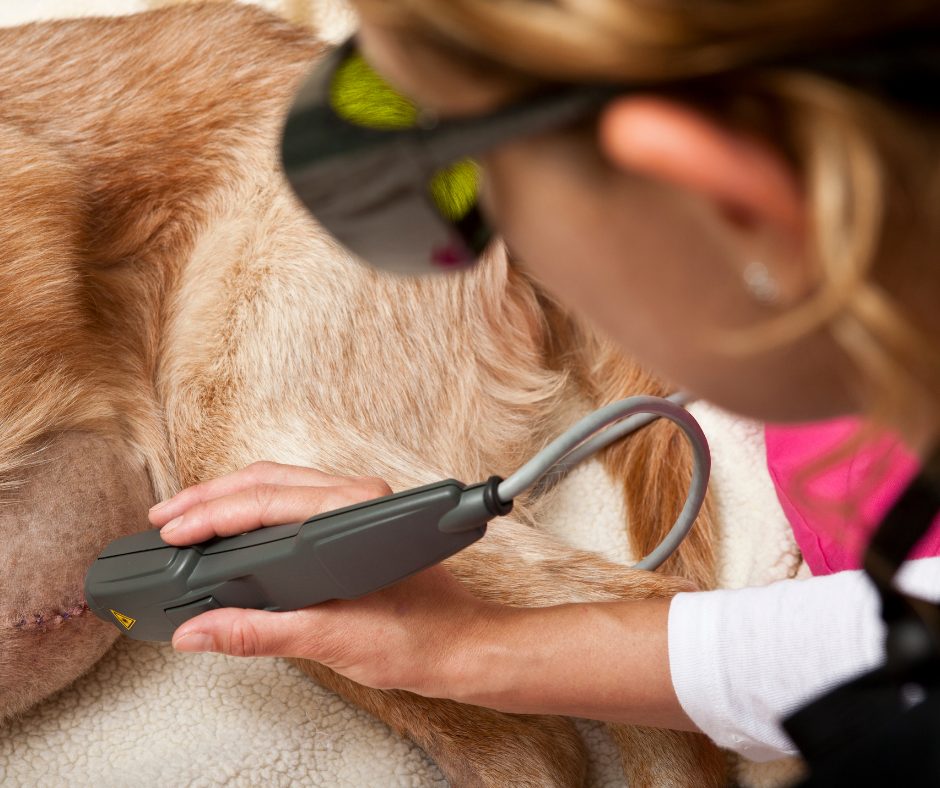
We use a specialist laser machine to generate light of the correct wavelengths during this therapy. When your pet receives treatment, the probe of the machine is placed against the skin of the affected area and the light photons it emits penetrate the tissue. The exact number of treatments a patient needs will depend on their condition and response to therapy, but most will need several sessions to gain the benefit.
When is laser therapy recommended in pets?
Laser therapy has a variety of uses and is often recommended as an aid alongside other more traditional treatments.
At our practice, we commonly use it for:
- Wound healing and post-surgical recovery – Due to enhancing cellular metabolism, lasers have the potential to accelerate tissue repair and cell growth. They can also stimulate stem cells, which are involved in renewing tissues.
- Joint disease – Lasers can have anti-inflammatory effects in conditions like osteoarthritis by decreasing things like prostaglandin E2 (PGE2) and cyclooxygenase-2 (COX-2) in the body, and increasing cytokines and growth factors. This may lead to reduced swelling and decreased pain.
- Tendon and ligament conditions – Laser therapy can be used to decrease inflammation and improve tensile strength in tendons and ligaments, reducing stiffness.
- Pain management – The exact mechanism is not known, but laser therapy can be a useful aid in pain management, with endorphin release believed to be a factor.
What are the benefits of laser therapy?
Reported benefits from laser therapy include:
- Faster tissue repair and wound healing
- Anti-inflammatory effects, with reduction in swelling noted
- Mild pain relief
- Reduced muscle tension
- Reduction of scar tissue formation
- Improved nerve function
While laser therapy can help many pets, it can be particularly useful for patients that have limited medical treatment options available to them. For example, pets who have liver or kidney disorders and therefore certain drugs carry a higher risk for their condition.
Is laser therapy effective?
Just like most medical treatments, individuals may respond variably. The treatment success of laser therapy can be affected by factors such as:
- Type and extent of disease
- Wavelength used
- Method of application
- Dosage
- Site
- Duration of treatment
Our vets will be able to make specific recommendations based on their examination of your pet. They will discuss with you whether they feel laser therapy may be helpful for your pet’s condition, as well as provide information on any other available treatments too.
What happens during a laser therapy session?
While the treatment plan is set out by your vet, a qualified veterinary nurse often carries out the laser therapy. Most individual sessions will last between a few minutes and half an hour, depending on your pet’s medical complaint. As mentioned previously, the number of sessions required will also depend on your pet’s condition. Some may only require a few sessions; others may require a long-term treatment regime, especially for ongoing conditions like arthritis.
During the session:
- Your pet’s fur may need to be clipped in the affected area, but your vet will advise you further on this.
- The area to be treated will need to be measured and dosage adjustments also made, based on other factors like skin pigmentation.
- The eyes of both your pet and any people in the room will need to be protected with tinted goggles, as lasers can cause damage to the back of the eye.
- The laser is moved slowly over the affected area for the time recommended by the vet.
- Most pets find the therapy quite relaxing. It is non-painful, and your pet will only experience a gentle warming sensation. There are no known side-effects to laser therapy in most pets, although care is taken in pets with malignant tumours, photosensitivity, or young growing bones.
So, is laser therapy safe for pets?
Yes! When carried out by veterinary professionals in a controlled setting, laser therapy is a safe and gentle alternative treatment. It is non-invasive, carries no side effects in the majority of patients, and is well-tolerated by many pets. It can be used to help manage a variety of conditions, from chronic painful arthritis to post-surgical wound repair.
It’s no wonder that laser therapy is growing in popularity!
If you are interested in laser therapy for your pet, then contact our team to discuss things further, and we will be more than happy to help.